This was surprisingly a non-fiction majority month for me which is usually not the case although I love non-fiction.

Fiction
-
Stanley’s Garage by William Bee 2/5
Edit: The book is from 2015 which is why it is so dated.
This was a children’s book I read in the book store. There is no reason to include it in this list except that I did have some thoughts about the book. Its 2023 and there are some fantastic children’s books so how is dated unimaginative stuff like this still selling? I admit I am not exactly updated on children’s books but I have bought so many books for friend’s kids in the last year or so and spent so much time in the children’s section in my neighbourhood bookshop, I have become a self-taught expert. I have spent so much time shifting through kid’s books and am so impressed by the creativity and quality so this was pointless.
Its about a garage, of course, and everyone comes to repair their cars in the garage. I know its not a book about public or transport policy but it felt so dated to me. Where is the broken down bus? Where is the cycle? At the very least, at least introduce the electric cars since most kid’s reading this book now probably not have to change the oil or fill fuel in their cars. Ridiculous.
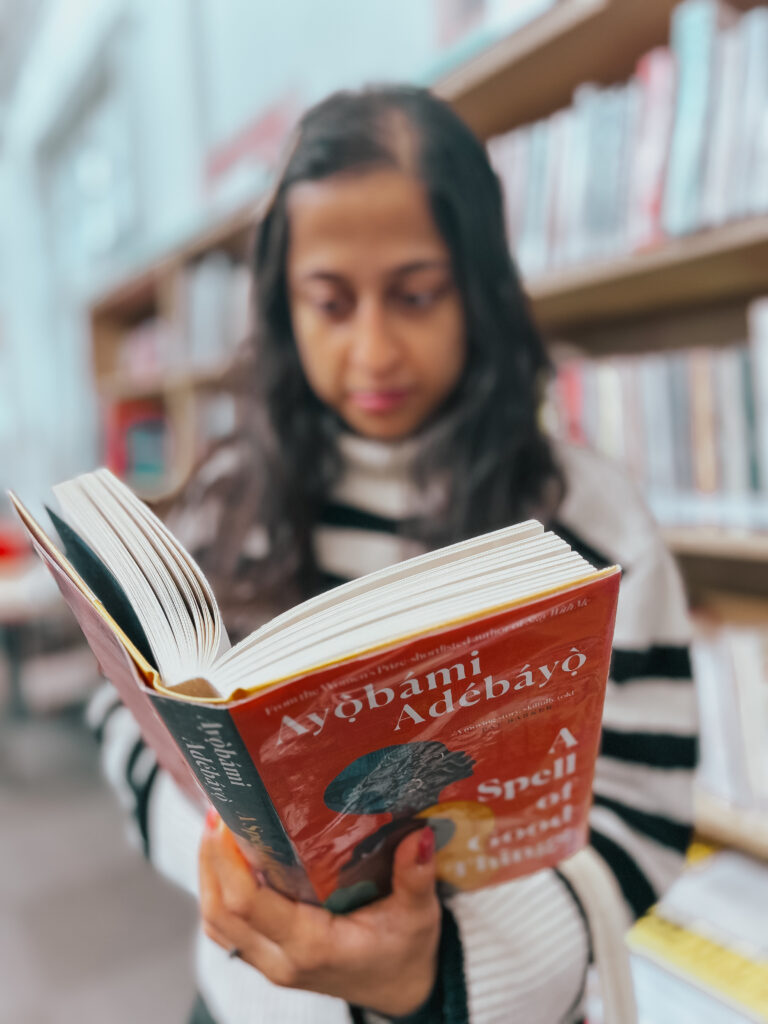
2. A Spell of Good Things by Ayọ̀bámi Adébáyọ̀ 4/5
Her first book, Stay With Me has been on my TBR for so long but I don’t know why I haven’t made the time to read it. This was on the Booker long list so of course, I jumped on this one as soon as I found in the library. In all honesty, the story is a bit all over the place and I loved it for that. There are almost three different story lines (at least 2 main ones) and they don’t connect completely or overlap as such but have a connection. This didn’t actually bother me as a reader.
Non-fiction
5. Billy No Mates: How I Realised Men Have a Friendship Problem by Max Dickins 4/5
This book was such an intriguing read. I don’t even really know why I picked it up but basically I had been reading and seeing a lot of news about how men are lonely. Basically men of a certain generation (maybe the boomer generation) did not really talk about their emotions and feelings or rather were taught not to do so and therefore, don’t have the emotional capacity and intelligence to do so. Their wives were their social calendars and they didn’t really know how to be friends or manage social relationships on their own. Gen X and us millennials are doing slightly better in the male friendship department but there is definitely a problem. The book is about how the writers looks into the problem and what he finds.
The statistics on men’s suicide and loneliness are quite heartbreaking but it was something I was aware of. If this is an area you have no information on, I would really recommend reading especially if you are a millennial male. I have seen how the men of the younger generation interact with each other and find it very refreshing and markedly different from how the men in my generation do. The book is more of a memoir than a non-fiction researched book which makes it for easy reading.
6. The Year of Magical Thinking by Joan Didion 3/5
This is a hard one. Its a book about the first year after this writer’s husband of 40 years dies. The book is about grief and I learnt a lot. I was listening to Spare at almost the same time and the parts where Harry talks about his mother were so similar to Didion’s writing about her grief after her husband died. We learn about the stages of grief and this books showed this very starkly. I think it would be very helpful for someone dealing with the loss of a loved one.
7. Spare by Prince Harry 3/5 (audiobook)
Is there anything left to say about this book? Its difficult to talk about a book which is so exposed and you know so much about it even before you read it. Its definitely well written and quite easy to read. There are parts of it that flag at least for me. In all honesty, I could have skipped all of the section of Harry in the army since I have absolutely no interest in it. I would have been interested in that part of his story if he had given more context or written about his politics and reasonining for joining the army and more specifically being involved in Afghanistan. What did he think the UK’s role was in Afghanistan and did he actually think he (as a part of the army) was achieving anything there? The only real reason he gave for going into the army was to get away from Kensington Palace and the media. Which is good enough but he is on the other side of the world supporting a war – whats the reasoning for that?
The most interesting part of the book for me was reading about how ordinary his life was. For instance, he talks about living in Frogmore Cottage (a cottage on the grounds of Kensington Palace) and making noodles or whatever and spending nights alone by himself which sounds so ordinary.
As usual I am way behind on my book posts (as well as general posts) but will try and catch up! A very happy 2024 everyone.
– Anisha


Leave a Reply